(Un)finishedness
Editorial, Personal

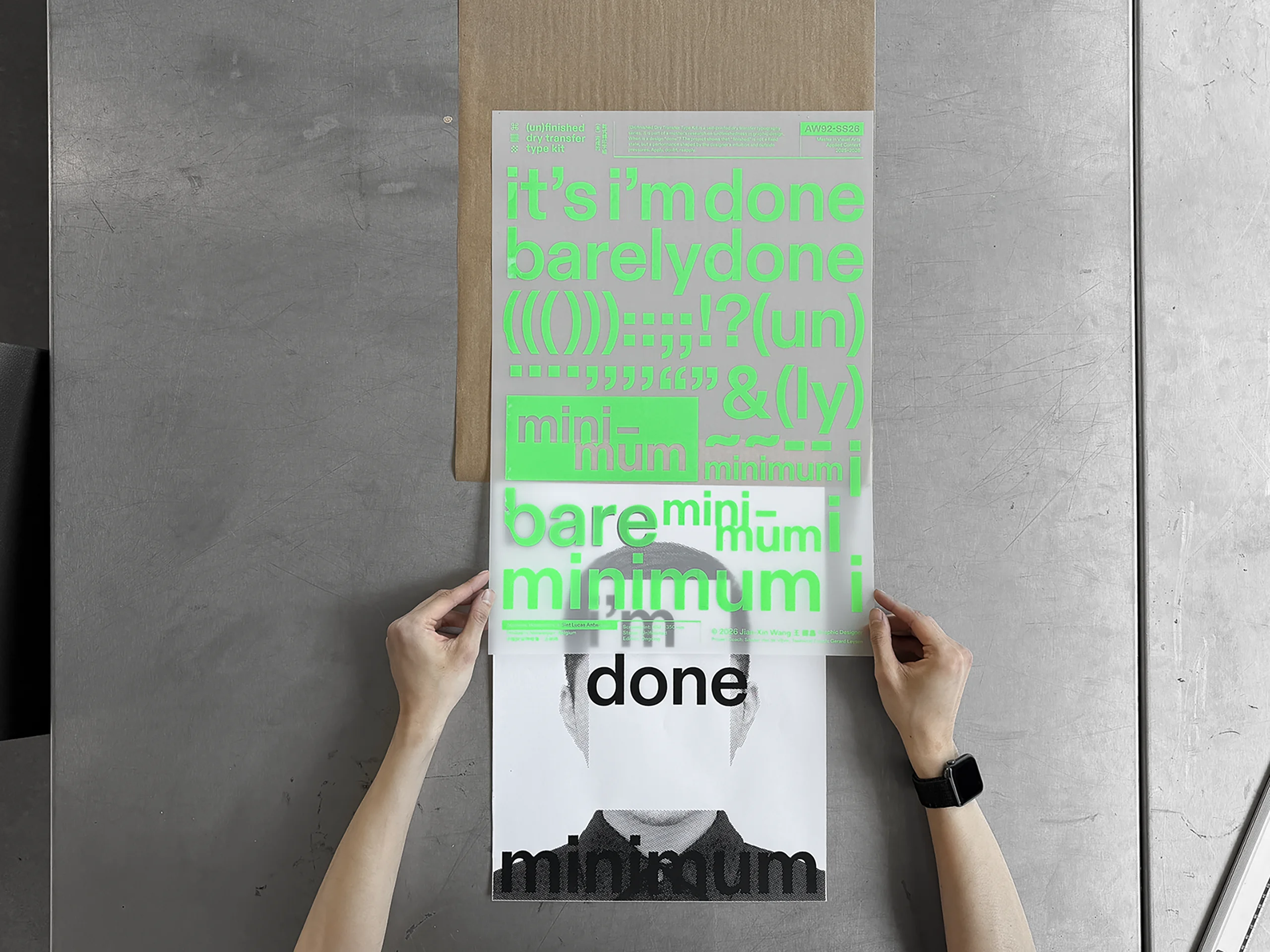
When is a piece of graphic design ever really "done"? A designer keeps revising: each version closes some doors and opens others. The work is never quite finished, only paused. (Un)finishedness treats completion not as a fixed state, but as something performed, negotiated between the designer's intuition and outside pressure. Through repeated screen-printing and a custom dry-transfer type kit, the project looks at how designers decide when to begin, when to pause, and when to reopen a piece of work.
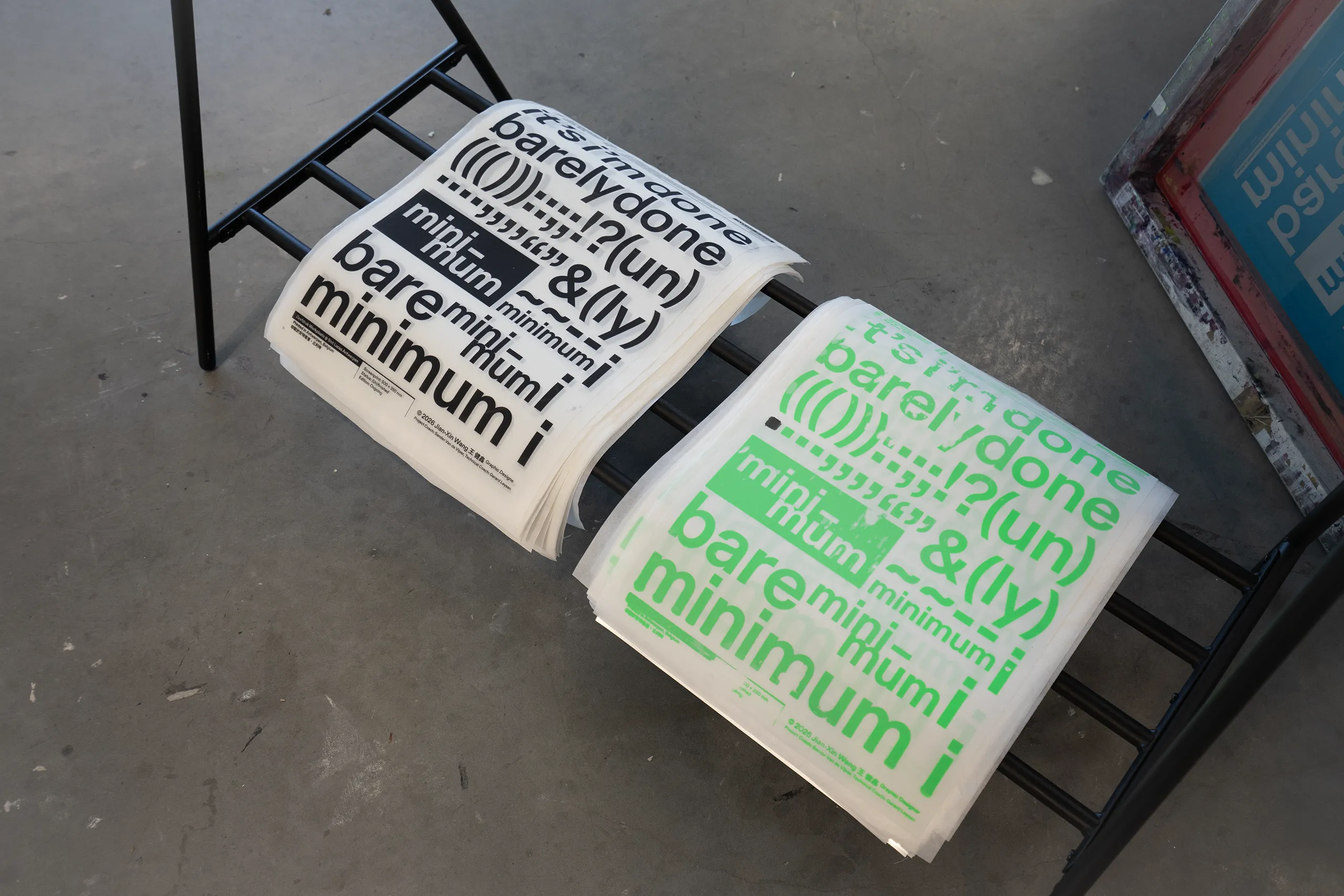
At its centre is a single poster, Bare Minimum, screen-printed in multiple versions over several months. Each version shifts by a colour change, a kerning adjustment, a repositioned element, a torn edge. The aim isn't to find the "best" version, but to make visible the small, often invisible decisions behind any design process: the doubt while making, the second-guessing afterwards, the moment of choosing to stop. The dry-transfer kit pushes this question further, letting decisions come from outside the designer. Completion, the project argues, is never the designer's choice alone.
Institution
Sint Lucas Antwerpen
Location
Belgium
Year
2025-2026

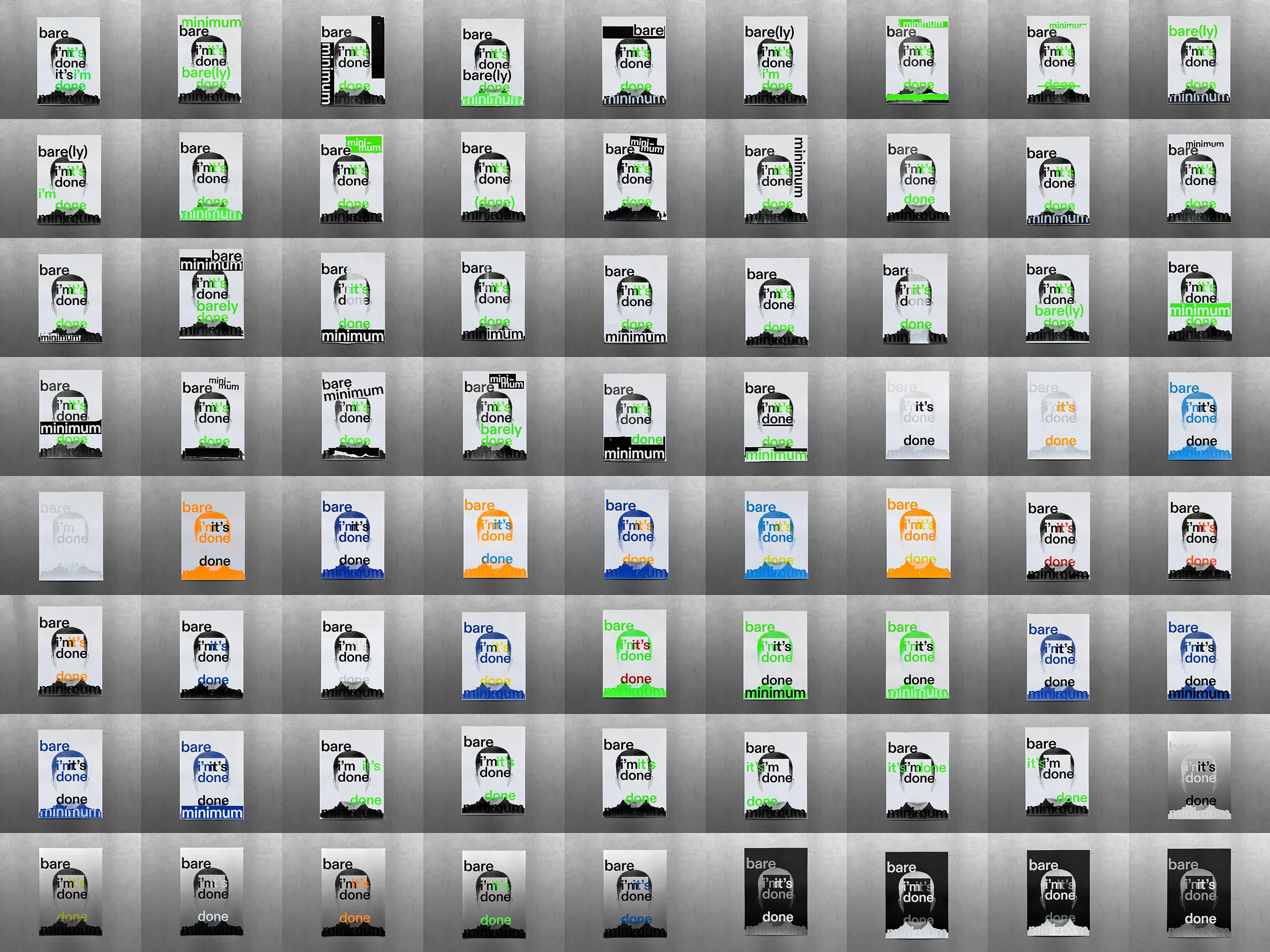
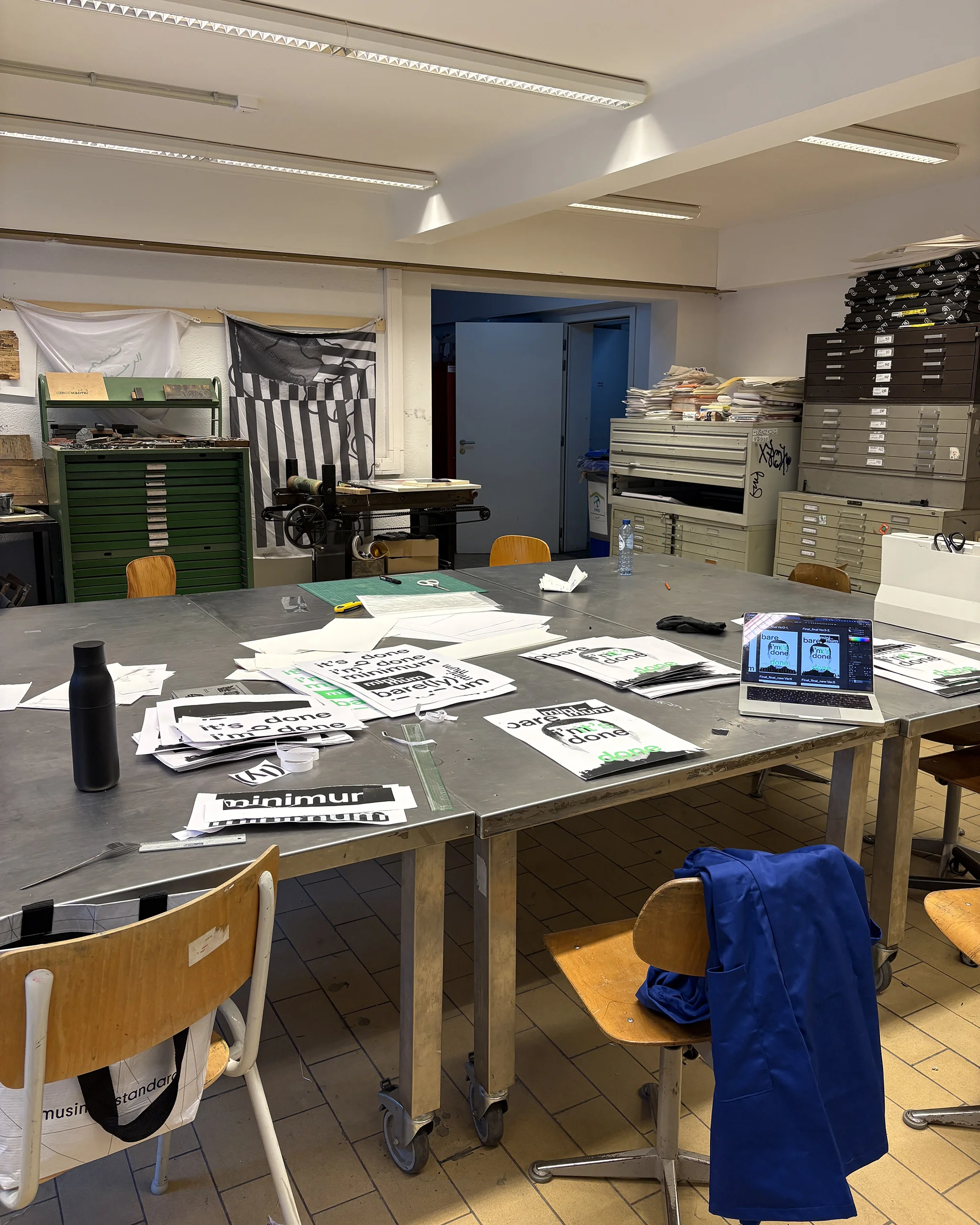
The idea takes shape through repetition itself: the same poster, printed again and again. Screen printing was the primary method, later joined by typographic collage and shifting colour variations, with each pass adding another layer of decisions to work through.
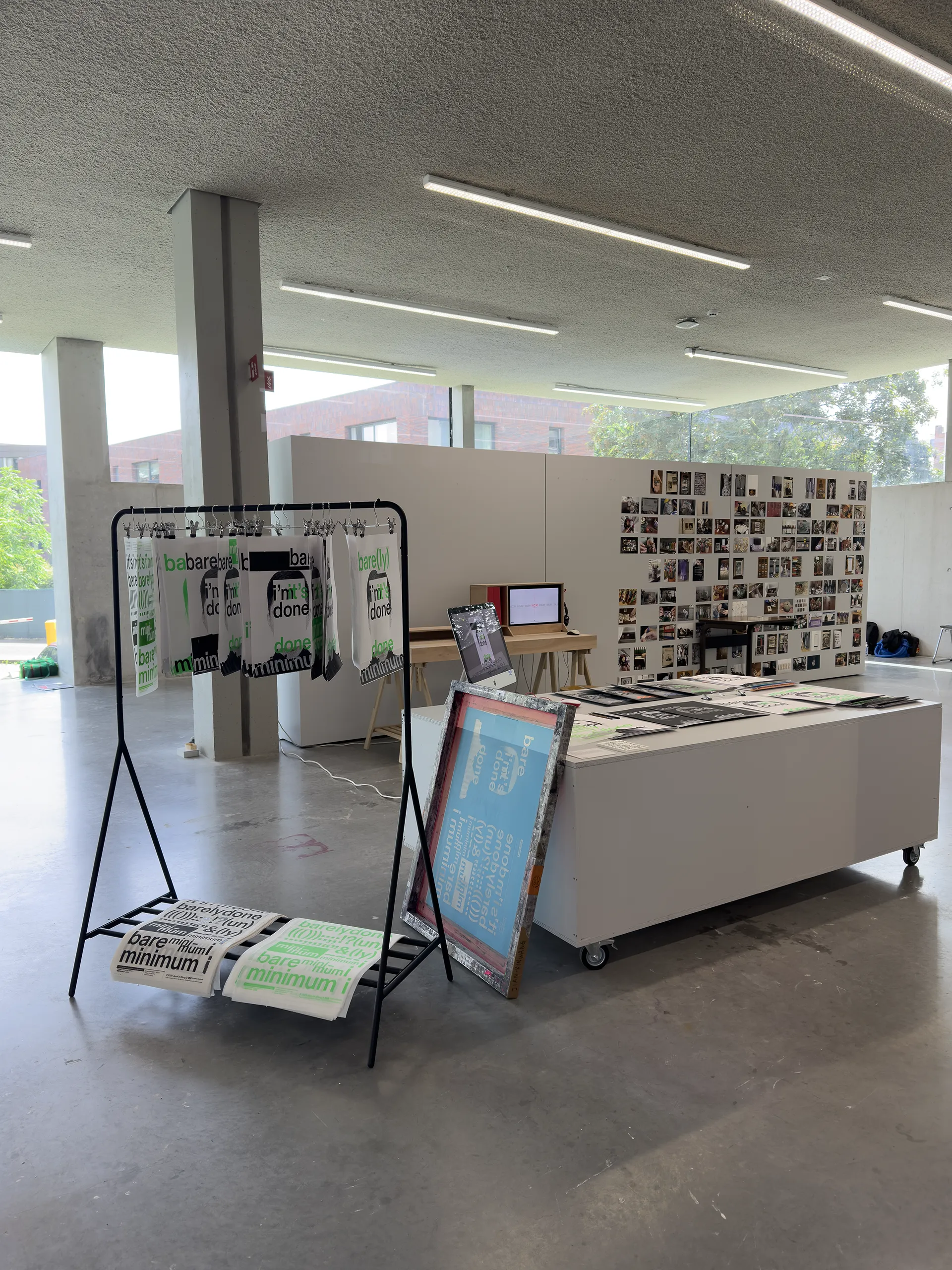
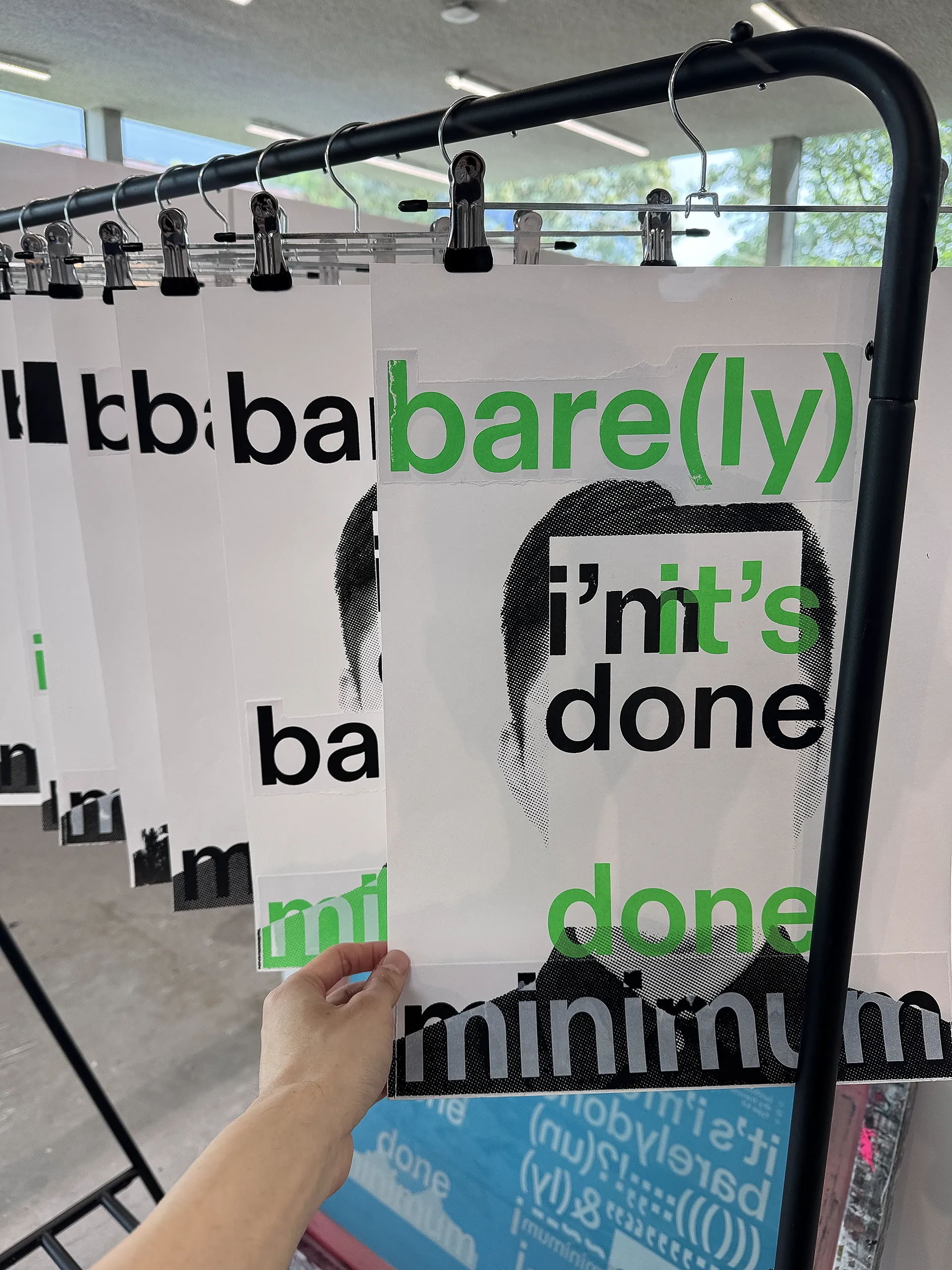


The exhibition display was built around the idea of a designer's desk: posters still hanging to dry, a table scattered with undecided variations, each one different in material, colour and paper stock. Rather than presenting one final result, the setup put the ongoing, unresolved nature of the process on show.


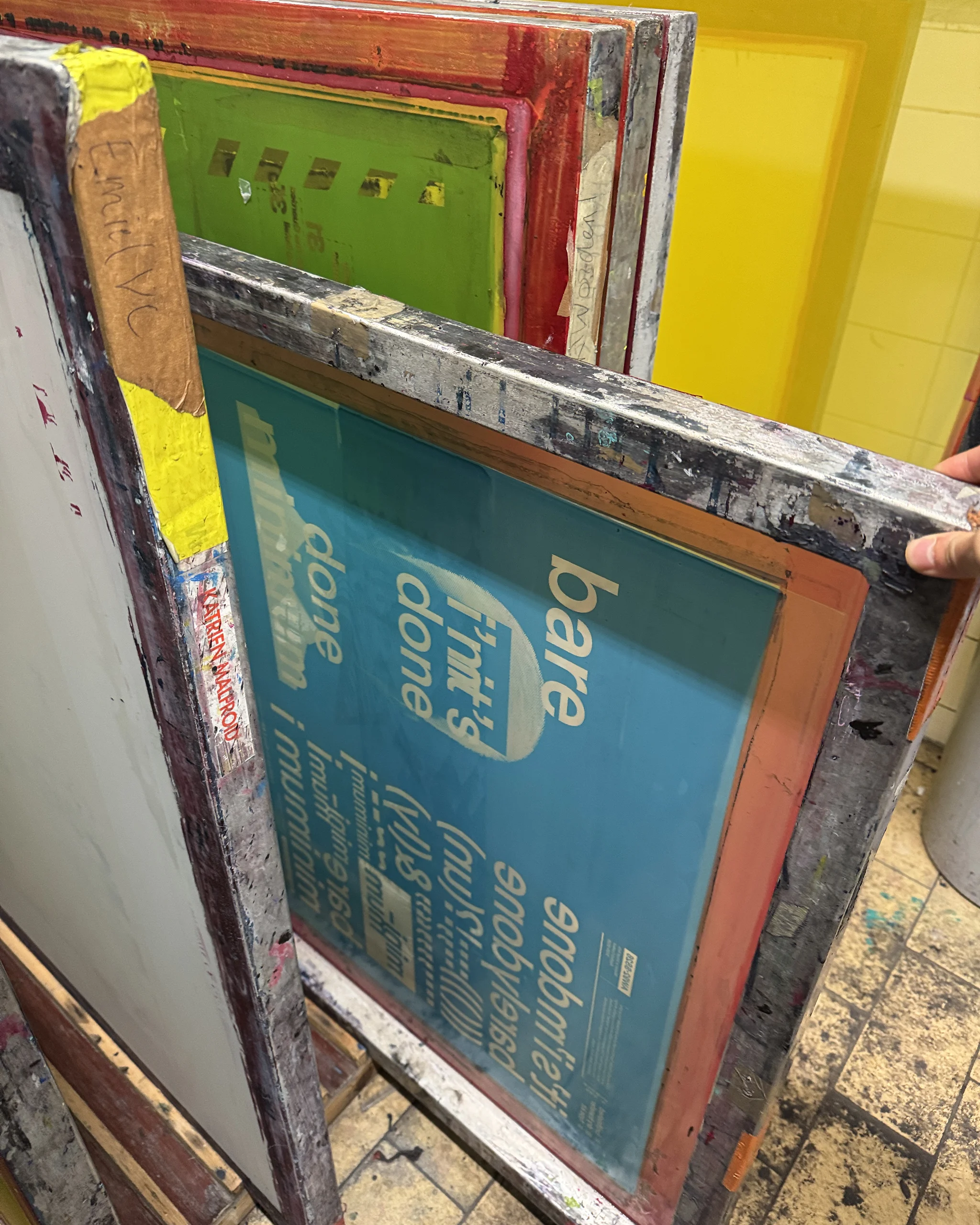
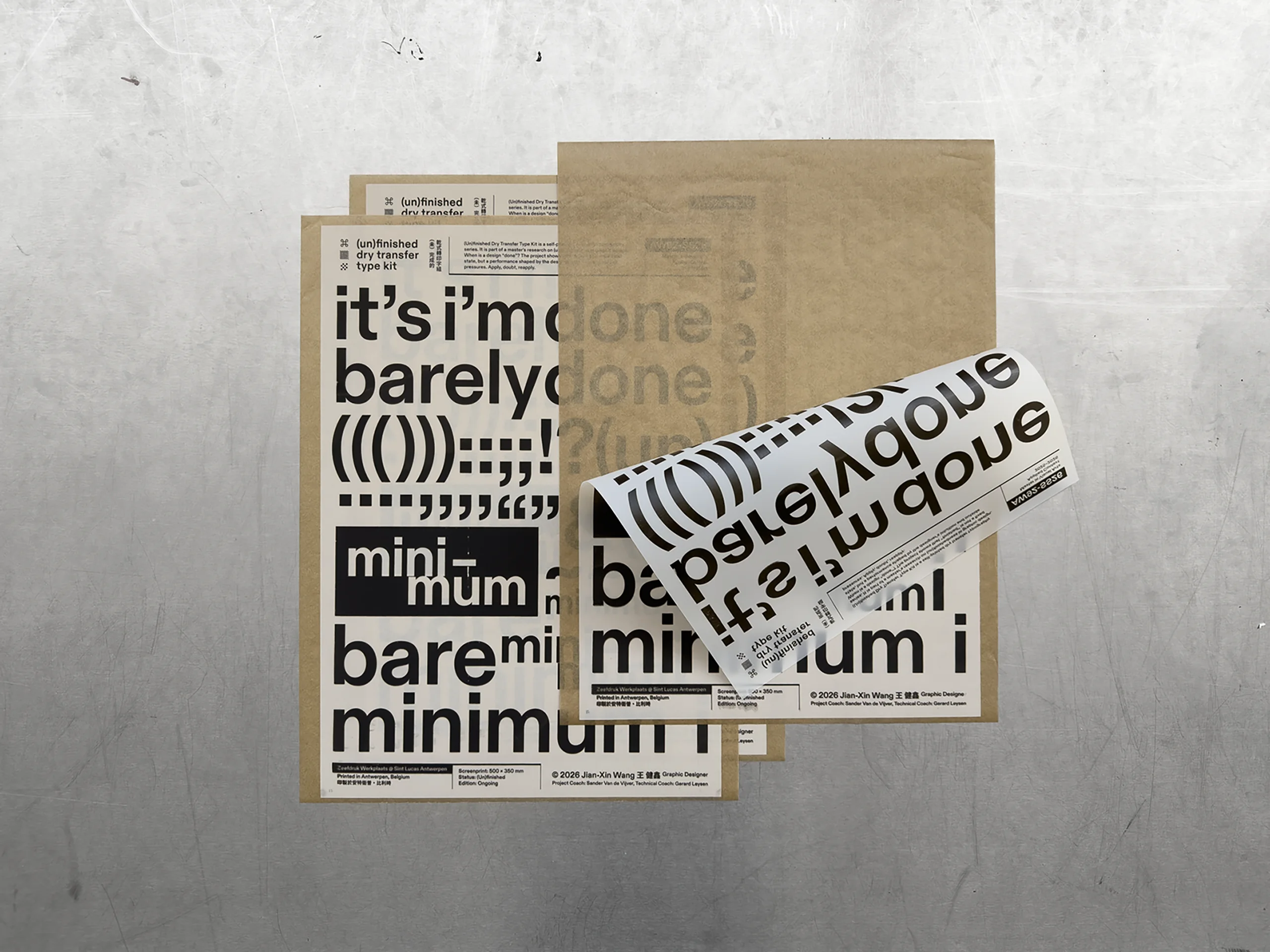
The (Un)finished Dry-transfer Kit, screen-printed and made by hand, left the poster open to endless possibility, endless only until the designer and the "client" reach an agreement. The day before the final crit, one last poster was made using the dry-transfer kit, marking the project's point of completion, or rather, its pause, decided together with the coaches and external jury memebers.
Credits